Our team is your expert
Managing director
Felipe Vidal, PhD, ERT
Pharmacist and Toxicologist (PhD, ERT – EUROTOX) with experience in regulatory toxicology and consultancy across international and national projects. My academic work has focused on the assessment of chemical endocrine disruption using in vivo approaches, including OECD TG 231 in amphibians, and in vitro approaches using human cell lines to investigate estrogenic, androgenic, glucocorticoid and thryroid effects. My experience also includes systematic evidence synthesis to support the preparation of scientific documents, technical reports, and a guideline.
Languages: 🇧🇷 Portuguese, 🇪🇸 Spanish, and 🇬🇧 English


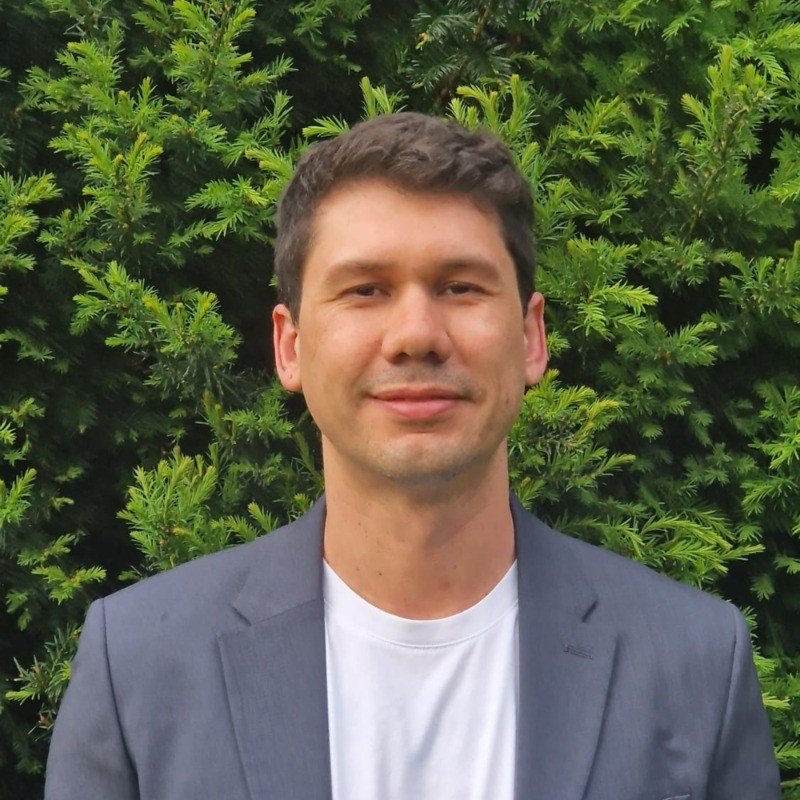
director
Daniela Brenner Vidal, PhD
Food Chemist and PhD in Environmental Chemistry and Toxicology, with experience in analytical chemistry, metabolomics, regulatory compliance testing, and safety assessment using in vitro and in silico methods. My research applies toxicokinetic and metabolomics approaches to improve in vitro toxicity assessment and in vitro-to-in vivo extrapolation (IVIVE), advancing the application of New Approach Methodologies (NAMs) for human health and environmental risk assessment.
Languages: 🇩🇪 German and 🇬🇧 English

Our Expertise
Research Articles
Brenner, D., Bergo, A., Řehůřková, E., Havlík, J., Babica, P., Sovadinová, I. (2026). A robust dynamic 3D liver spheroid platform for (sub)chronic toxicity assessment: Metabolic characterization of HepG2 spheroids as a case Study. Toxicology, 526, 154538. DOI: 10.1016/j.tox.2026.154538
Brenner, D., Bernal, K., Sychrová, E., Kohoutek, J., Langouët, S., Tebby, C., Beaudouin, R., Boufalaas, R., Dair‐ou, J., and Tête, A., Babica, P., Blanc E.B., Sovadinová, I., Billat, PA. (2026). Chemical fate in vitro: A physiological biokinetic (PBK) model for cell‐based assays. ALTEX, 43 (2). DOI: 10.14573/altex.2509261
Pinto-Vidal, F. A., Krauss, M., Novák, J., Melymuk, L., Brack, W., & Hilscherová, K. (2025). Identification of compounds contributing to glucocorticoid activity in indoor dust supported by orthogonal fractionation. Environmental Pollution, 367, 125579. DOI: 10.1016/j.envpol.2024.125579
Kostrzewa, M., Seyyedsalehi, M. S., Godono, A., Collatuzzo, G., Fiorini, G., Moscato, S., Santello, A., Roth, C., Wensing, M., Massimino, G., Cella, M. T., Biagioli, V., Magaña, M., Pinto-Vidal, F. A., et al. (2025). Cancer Prevention at Work (CPW) project: Rationale, framework and research protocol. PLOS One, 20, e0335752. DOI: 10.1371/journal.pone.0335752
Lungu-Mitea S, Stein Åslund M, Reichstein I, Pinto-Vidal FA, Schiwy A, Hollert H, Jacobs MN, Hilscherová K. (2025) On the Utilization and Characterization of External Biotransformation Systems in In Vitro Toxicology: A Critical Review of the Scientific Literature with Guidance Recommendations. ACS Environ Au. Nov 27;6(1):21-45. DOI: 10.1021/acsenvironau.5c00096.
Collatuzzo, G., Godono, A., Fiorini, G., Vencovsky, D., Giordani, S., Biagioli, V., Pinto-Vidal, F. A., et al. (2025). Expanding cancer prevention: Strategies integrated into occupational health surveillance. Cancers, 17, 3535. DOI: 10.3390/cancers17213535
Pinto-Vidal, F. A., Novák, J., Jílková, S. R., Rusina, T., Vrana, B., Melymuk, L., & Hilscherová, K. (2024). Endocrine-disrupting potential of total and bioaccessible extracts of dust from indoor environments. Journal of Hazardous Materials, 469, 133778. DOI: 10.1016/j.jhazmat.2024.133778
Pinto-Vidal, F. A., Abdalla, F. C., Carvalho, C. S., Utsunomiya, H. S. M., Oliveira, L. A. T., Salla, R. F., & Jones-Costa, M. (2021). Metamorphic acceleration following exposure to lithium and selenium in American bullfrog tadpoles (Lithobates catesbeianus). Ecotoxicology and Environmental Safety, 207, 111101. DOI: 10.1016/j.ecoenv.2020.111101
Pinto-Vidal, F. A., Carvalho, C. S., Abdalla, F. C., Ceschi-Bertoli, L., Utsunomiya, H. S. M., Henrique da Silva, R., Salla, R. F., & Jones-Costa, M. (2021). Metabolic, immunologic, and histopathologic responses in premetamorphic Lithobates catesbeianus following exposure to lithium and selenium. Environmental Pollution, 270, 116086. DOI: 10.1016/j.envpol.2020.116086
Pinto-Vidal, F. A., Carvalho, C. S., Abdalla, F. C., Utsunomiya, H. S. M., Salla, R. F., & Jones-Costa, M. (2021). Effects of lithium and selenium on tail muscle of American bullfrog tadpoles (Lithobates catesbeianus) during pre-metamorphosis. Environmental Science and Pollution Research, 270, 101–111. DOI: 10.1007/s11356-021-15686-5
Ceschi-Bertoli, L., Vidal, F. A. P., Balsamo, P. J., & Abdalla, F. C. (2020). Comet assay protocol for Bombus atratus fat body and pericardial cells exposed to safe concentrations of mercury. Chemosphere, 261, 127752. DOI: 10.1016/j.chemosphere.2020.127752
Franco-Belussi, L., Jones-Costa, M., Salla, R. F., Souza, B. F., Pinto-Vidal, F. A., Oliveira, C. R., Silva-Zacarin, E. C. M., Abdalla, F. C., Duarte, I. C. S., & Oliveira, C. (2020). Hepatotoxicity of the anionic surfactant LAS in bullfrog tadpoles. Chemosphere, 129014. DOI: 10.1016/j.chemosphere.2020.129014
Salla, R. F., Jones-Costa, M., Abdalla, F. C., Vidal, F. A. P., et al. (2020). Differential liver histopathological responses to amphibian chytrid infection. Diseases of Aquatic Organisms, 142, 177–187. DOI: 10.3354/dao03541
Klimm, A., Brenner, D., Lok B., Sprengel, J., Krätschmer, K., and Vetter, W. (2019). Photolytic Transformation Products of Decabromodiphenyl Ethane (DBDPE). Environmental Science & Technology, 53 (11), 6302‐6309. DOI: 10.1021/acs.est.9b01231
Jones-Costa, M., Franco-Belussi, L., Pinto-Vidal, F. A., Gongora, N. P., Castanho, L. M., Carvalho, C. S., Silva-Zacarin, E. C. M., Abdalla, F. C., Duarte, I. C. S., Oliveira, C., & Salla, R. F. (2018). Cardiac biomarkers as sensitive tools to evaluate xenobiotic impacts on amphibians: Effects of LAS. Ecotoxicology and Environmental Safety, 151, 184–190. DOI: 10.1016/j.ecoenv.2018.01.022
Book Chapters
Salla, R. F., Pinto-Vidal, F. A., Boeing, G., Provase, M., Tsukada, E., & Rocha, T. L. (2023). Developmental abnormalities in tadpoles as biomarkers to assess ecotoxicity of traditional and emerging pollutants. In Toxicology of Amphibian Tadpoles (CRC Press).
Carvalho, C. S., & Pinto-Vidal, F. A. (2023). Ecotoxicological impacts of metals on amphibian tadpoles. In Toxicology of Amphibian Tadpoles (CRC Press).
Guidelines
Vencovsky, D., Vidal, F., Garrett, S., Richards, R., Wright, E., Clack, T., Bannister Curran, L., Copping, D., Standing, H., Curic, M., Szabo, N., Lappe-Osthege, T., van Balen, P., Wissink, E., van der Meer, N., Galea, K. S., McLean, P., Jones, A., McElvenny, D., Butera, S., Lyng, R. J., Camboni, M., Chiabrando, F., Schaafsma, F., Maas, J., Dehghani, A., Kwiatkowska, A. (2025). Guidelines for managing asbestos-related health and safety risks at work. Publications Office of the European Union. https://doi.org/10.2767/3790800 (PDF); https://doi.org/10.2767/6656229 (printed).
Projects – Project Contributions
Selected Projects — Grants Secured as Principal Investigators
Analytical Approach for the Elucidation of Toxic Drivers in Indoor Dust
2022/01/01 – 2022/12/31
Funding: Internal Grant Agency of Masaryk University (IGA-MUNI), the Czech Republic. (MUNI/IGA/1294/2021)
Role: Principal investigator
Status: Completed
This project aimed to identify effect drivers of glucocorticoid activity in indoor dust samples using an effect-directed approach supported by parallel fractionation and high-resolution HPLC-MS. The project investigated endocrine-disrupting compounds present in environmental samples using in vitro screening, leading to the identification of two pharmaceuticals as bioactive substances within a complex mixture. The investigation employed a sophisticated workflow combining orthogonal fractionation approaches and high-resolution HPLC-MS to identify and characterize the compounds responsible for the observed biological activity.
The Influence of Lithium and Selenium on the Metamorphosis of American Bullfrog Tadpoles (Lithobates catesbeianus)
2017/02/01 – 2019/02/28
Funding: Coordination for the Improvement of Higher Education Personnel (CAPES), Brazil
Role: Principal investigator
Status: Completed
This project aimed to investigate the effects of exposure to inorganic contaminants in aquatic animals under in vivo conditions. Experimental studies were conducted to assess the effects of lithium and selenium, both individually and in combination. Multiple endpoints at the molecular, organ, and behavioural levels were evaluated. The resulting work was published in high-impact journals in the fields of toxicology and environmental sciences.
Selected projects where we contributed as part of the research team
NAMWISE – NAMs Within Integrated Safety & Efficacy evaluation of chemicals and pharmaceuticals
2024/12/01 – Current
Funding: European Health and Digital Executive Agency under grant agreement n°101191595
Role in this project: Investigator
Status: Ongoing
NAMWISE project aims to drive the adoption and integration of New Approach Methodologies (NAMs) for the assessment of the safety and efficacy of chemicals and pharmaceuticals. By providing a comprehensive set of recommendations, guidance, and training resources, NAMWISE seeks to validate and implement NAMs effectively. The project adopts a definition of NAMs that excludes vertebrate-based data and models, focusing on in vitro approaches (including organoids and organ-on-chips), in silico methods, Adverse Outcome Pathways (AOP), and Integrated Approaches to Testing and Assessment (IATA).
Cancer Prevention at Work
2022/11/30 – 2026/11/30
Funding: Horizon Europe under grant agreement nº 101104716
Role in this project: Investigator
Status: Ongoing
Cancer Prevention at Work (CPW) is an EU-funded project comprised of 19 European organisations that is piloting the use of occupational health surveillance programmes to reduce the prevalence of major infections (Hp, HCV and HPV) that are a risk factor in the development of cancer.
Guidance for the safe management of asbestos at work
2023/11/30 – 2024/11/30
Funding: European Commission (DG EMPL), under contract nº VC/2024/0127
Role in this project: Investigator
Status: Ongoing
The project aimed to update the 2012 EU guidelines by incorporating the latest scientific, technical, and legal advancements. It seeks to provide a comprehensive and up-to-date overview of good practices from both EU Member States and third countries, fostering the adoption of these practices across the EU. Additionally, the project addresses disparities in stakeholder access to guidelines among Member States and serves as a valuable reference for training and enforcement initiatives.